Cognitive & Neurological
Dihexa
🔹 What is Dihexa? Class: Synthetic oligopeptide (nootropic / neurogenic peptide). Mechanism: Potent HGF (hepatocyte growth factor) agonist that promotes synaptogenesis, neurogenesis, and neuronal connectivity. Enhances cognitive function by supporting dendritic branching and syn
Updated Nov 22, 2026
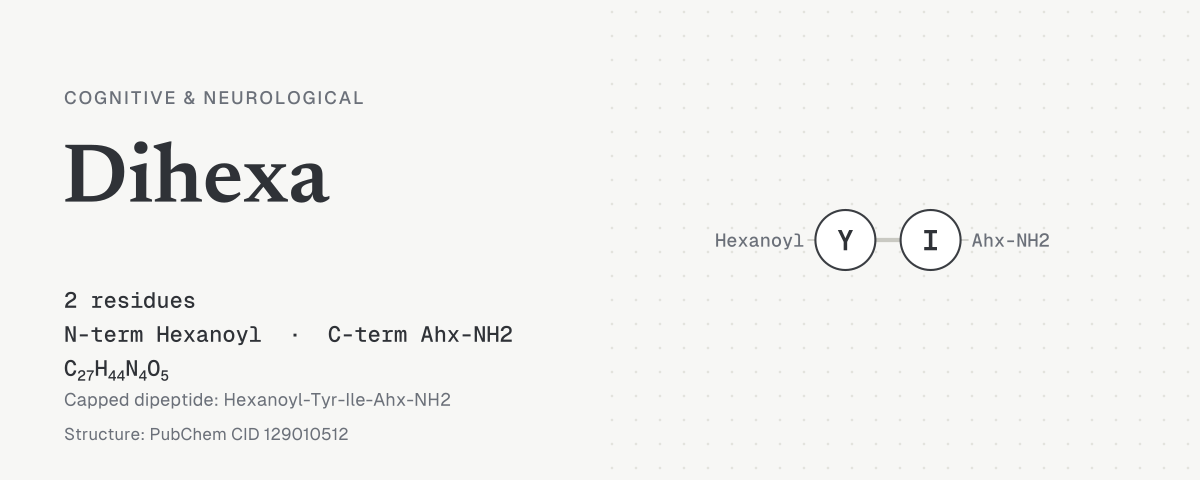
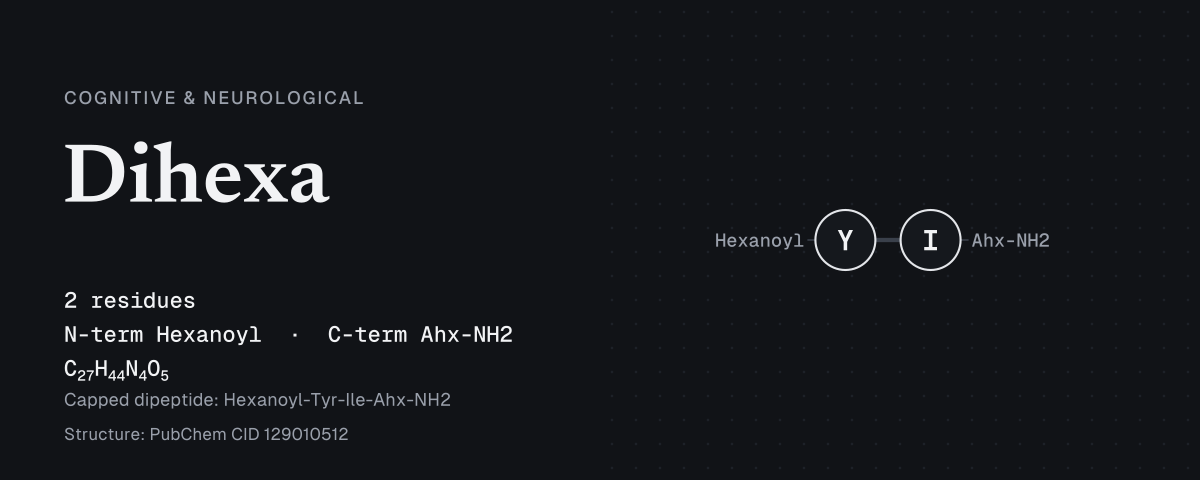
🔹 What is Dihexa?
Class: Synthetic oligopeptide (nootropic / neurogenic peptide).Mechanism:
- Potent HGF (hepatocyte growth factor) agonist that promotes synaptogenesis, neurogenesis, and neuronal connectivity.
- Enhances cognitive function by supporting dendritic branching and synaptic density.
- Potentially improves memory formation, learning capacity, and neuroplasticity.
Primary focus: Cognitive enhancement (memory, learning, focus), neuroplasticity, neurorepair, and neuroregeneration.
🔹 Oral Dosage (least common)
Range studied/used in research: Extremely limited; oral bioavailability likely poor.
Typical protocol: Oral or sublingual use is largely anecdotal; most users prefer injectable forms for reliable absorption.
Notes: Oral administration is speculative and under-documented.
🔹 Injectable / Subcutaneous Dosage (most common)
Range:
- Common anecdotal dosing is 5–10 mg per week, divided into daily or every-other-day subcutaneous injections.
Frequency: Daily or every-other-day dosing is typical for cognitive and neuroplasticity support.
Rationale: Microgram to low milligram dosing supports synaptogenesis while minimizing risk of overstimulation or off-target effects.
🔹 Cycle Length
Common cycle length: 4–6 weeks for neurocognitive or neuroregenerative support.
Off-cycle: 2–4 weeks to assess efficacy and avoid potential receptor downregulation.
Note: Duration is based on anecdotal practice and limited research; no formal clinical protocols exist.
🔹 Optimal Dosing Window
- Morning or early afternoon dosing is favored to align with peak cognitive activity.
- Avoid late evening doses in sensitive individuals due to potential overstimulation or sleep interference.
✅ Educational Integration Example (injectable / subcutaneous)
- Example protocol: 1–2 mg Dihexa daily via subcutaneous injection for 5–6 weeks, followed by a 2-week break.
- Pair with: Cognitive support supplements (omega-3 fatty acids, choline sources), adequate sleep, and mental stimulation.
🔹 Stacking Strategy (Educational / Complementary)
Since Dihexa is a neurogenic and cognitive-enhancing peptide, complementary stacks focus on supporting synaptic plasticity, neuroprotection, and overall brain health:
🔸 Cognitive & Synaptic Support
- Adamax (NA-Semax derivative): Enhances BDNF signaling and microtubule stabilization.
- Noopept or Semax: Support memory, focus, and neuroprotection.
- Lion’s Mane / Hericium erinaceus: Natural NGF (nerve growth factor) support.
🔸 Metabolic & Mitochondrial Support
- NAD⁺ precursors (NMN, NR): Support cellular energy and neuronal repair.
- CoQ10 / PQQ: Support mitochondrial health in neurons.
🔸 Lifestyle & Recovery
- Adequate sleep and cognitive engagement to maximize neuroplasticity.
- Anti-inflammatory nutrients (omega-3 fatty acids, antioxidants) to reduce neuroinflammation.
Rationale: Dihexa promotes synaptogenesis and neuronal connectivity; stacking aims to enhance neuroplasticity, mitochondrial function, and cognitive resilience rather than duplicating the peptide’s direct effects.