Anti-Aging, Longevity & Cellular Health
MOTS-C
🔹 What is MOTS-C ? Class: Mitochondrial-derived peptide (16-amino acid peptide encoded by mitochondrial DNA). Mechanism: Acts as a mitochondrial signaling peptide that regulates metabolism and stress responses. Enhances AMPK activation → improves glucose uptake, fatty acid oxida
Updated Nov 22, 2026
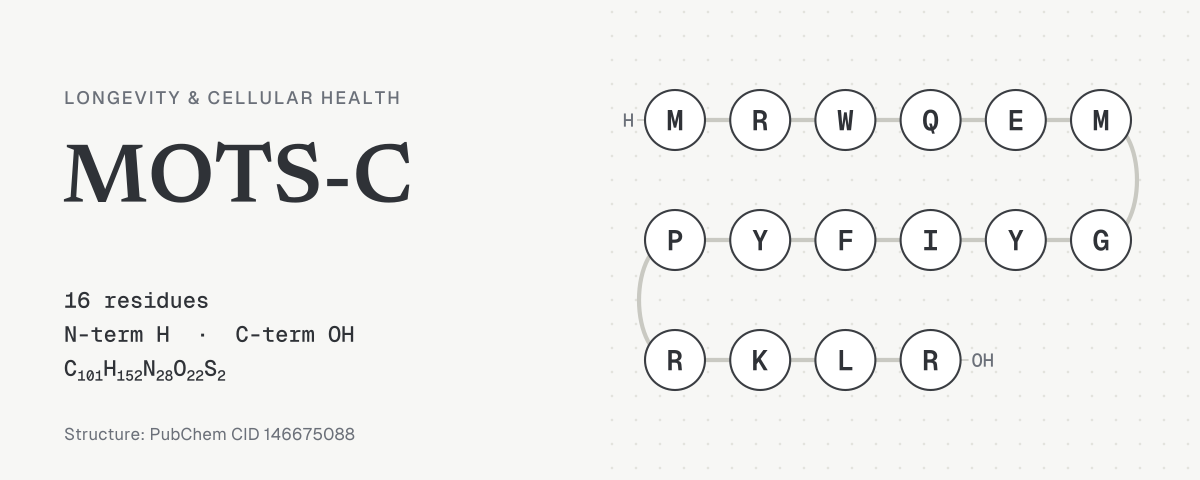
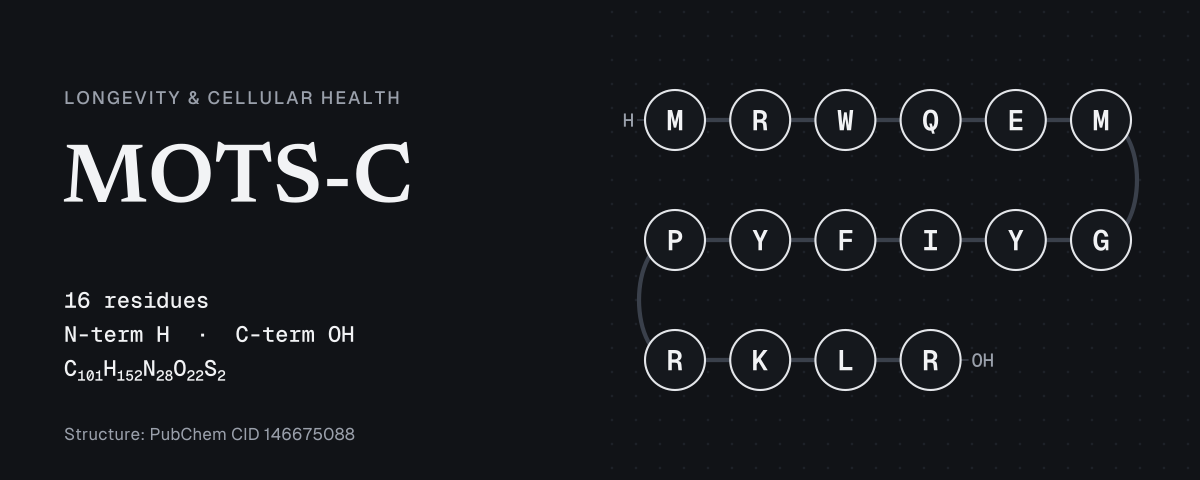
🔹 What is MOTS-C ?
Class: Mitochondrial-derived peptide (16-amino acid peptide encoded by mitochondrial DNA).Mechanism:
- Acts as a mitochondrial signaling peptide that regulates metabolism and stress responses.
- Enhances AMPK activation → improves glucose uptake, fatty acid oxidation, and insulin sensitivity.
- Supports mitochondrial biogenesis and protects against metabolic dysfunction.
- Influences exercise capacity, endurance, and recovery by optimizing cellular energy utilization.
Primary focus:
- Metabolic optimization (insulin sensitivity, glucose regulation, fat metabolism).
- Exercise performance and endurance.
- Anti-aging and mitochondrial resilience.
- Neuroprotective and cytoprotective roles.
🔹 Oral Dosage: Not effective; rapidly degraded in the digestive system.
🔹 Injectable / Subcutaneous Dosage (most common)
Range:
- Typical research use: 5–15 mg per week, divided into 2–3 doses.
- Common dosing patterns: 5 mg 2–3x per week, or 10 mg once weekly.
Frequency: Subcutaneous injection, often pre- or post-training for performance focus.
Rationale: Regular pulses support mitochondrial adaptation and metabolic benefits without desensitization.
🔹 Cycle Length
- Common cycles: 4–12 weeks.
- Often used in blocks around training seasons or metabolic reset periods.
- Breaks of 2–4 weeks are typical before restarting.
🔹 Optimal Dosing Window
- Morning or pre-training is preferred for energy and endurance benefits.
- Can also be taken post-exercise to aid recovery and mitochondrial biogenesis.
✅ Educational Integration Example
- Example protocol: 5 mg MOTS-c, 2x/week (Mon/Thu), subcutaneous injection, for 8 weeks.
- Paired with: Exercise regimen, balanced nutrition, NAD⁺ support.
🔹 Stacking Strategy (Educational / Complementary)
Since MOTS-c is a mitochondrial optimizer and metabolic regulator, stacking tends to emphasize energy support, recovery, and longevity:
🔸 Mitochondrial & Energy Metabolism:
- NAD⁺ precursors (NMN, NR) or direct NAD⁺ therapy: Synergize with AMPK activation.
- AICAR, L-Carnitine, CoQ10, PQQ: Complement mitochondrial energy flux and fatty acid oxidation.
🔸 Performance & Recovery:
- GH secretagogues (CJC-1295/Ipamorelin, or Tesamorelin): Support lean mass and recovery alongside mitochondrial function.
- BPC-157 or TB-500: Add tissue repair and systemic recovery benefits.
🔸 Anti-Aging & Longevity:
- Epitalon: Cellular aging pathway modulation (telomeres).
- FOXO4-DRI or Senolytics: Synergize with MOTS-c’s resilience effects for long-term vitality.
- Melanotan-1 (MT-1): Protective skin/tissue support during increased energy utilization.
Rationale: MOTS-c shines as a metabolic reset peptide, so stacks often combine mitochondrial boosters, recovery peptides, and longevity agents.
⚠️ Safety Notes:
- Generally considered well-tolerated in research use.
- Possible mild side effects: injection site irritation, fatigue, or mild headaches.
- Human clinical research is still early—long-term safety not fully established.
Studied in Humans? No “MOTS-C” has human observational data (e.g., levels change with exercise) but no published trials administering MOTS-C to people; hence “NO” here.
FDA Approved? No
Allowed for 503a Compounding Pharmacy? No
Rory's Comment: Thumbs Sideways
Disclaimer: Do not rely on any dosing information provided, this is for educational and research only. Always double and triple check alternative references for education. Please consult with healthcare provider for your specific dosing and protocol if applicable.
Dr. Bhatti