GLP-1s
Semaglutide
Semaglutide 🔹 What is Semaglutide? Class : GLP-1 (glucagon-like peptide-1) receptor agonist Mechanism : Stimulates insulin secretion in response to meals. Suppresses glucagon release, reducing hepatic glucose production. Delays gastric emptying, promoting satiety and reducing ap
Updated Nov 22, 2026
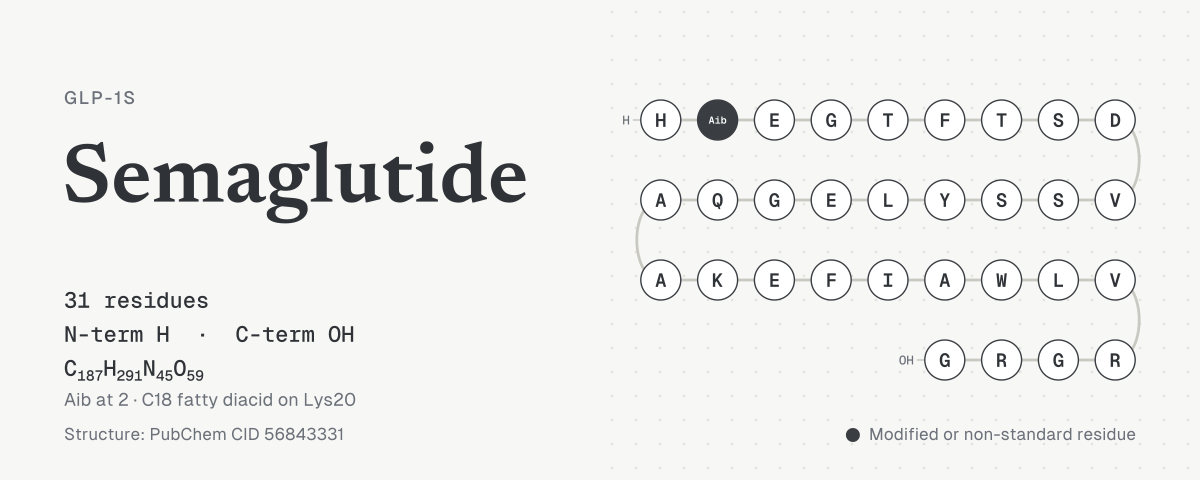

🔹 What is Semaglutide?
Class: GLP-1 (glucagon-like peptide-1) receptor agonist
Mechanism:
- Stimulates insulin secretion in response to meals.
- Suppresses glucagon release, reducing hepatic glucose production.
- Delays gastric emptying, promoting satiety and reducing appetite.
- Improves beta-cell function and insulin sensitivity.
Primary Focus:
- Type 2 diabetes management.
- Chronic weight management (Wegovy).
- Cardiovascular risk reduction in type 2 diabetes.
🔹 Oral Dosage
Rybelsus (oral semaglutide):
- 3 mg once daily for 30 days.
- After 30 days, increase to 7 mg once daily.
- If additional glycemic control is needed, increase to 14 mg once daily.
Administration:
- Take on an empty stomach, at least 30 minutes before the first food, drink, or other medications of the day.
- Swallow whole with no more than 4 ounces of plain water.
- Do not chew, crush, or split the tablet.
🔹 Injectable / Subcutaneous Dosage
Ozempic (for type 2 diabetes):
- 0.25 mg once weekly for 4 weeks (treatment initiation).
- After 4 weeks, increase to 0.5 mg once weekly.
- If additional glycemic control is needed after at least 4 weeks, increase to 1 mg once weekly.
- Maximum recommended dose: 1 mg once weekly.
Wegovy (for weight management):
- 0.25 mg once weekly for 4 weeks.
- Increase to 0.5 mg once weekly for 4 weeks.
- Increase to 1 mg once weekly for 4 weeks.
- Increase to 1.7 mg once weekly for 4 weeks.
- Maintenance dose: 2.4 mg once weekly.
Note: The 0.25 mg dose is intended for treatment initiation and is not effective for glycemic control. Drugs.com
🔹 Cycle Length
- Type 2 Diabetes (Ozempic): Treatment duration varies; consult healthcare provider.
- Weight Management (Wegovy): Initial titration over 16 weeks to reach maintenance dose.
🔹 Optimal Dosing Window
- Administer at any time of day, with or without food.
- Consistency is key; administer on the same day each week.
✅ Educational Integration Example
Protocol:
- Weeks 1–4: 0.25 mg subcutaneously once weekly.
- Weeks 5–8: 0.5 mg subcutaneously once weekly.
- Weeks 9–12: 1 mg subcutaneously once weekly.
- Weeks 13–16: 1.7 mg subcutaneously once weekly.
- Week 17 and onward: 2.4 mg subcutaneously once weekly.
Paired with:
- Lifestyle modifications including dietary changes and physical activity.
Rationale:
- Combines pharmacological intervention with behavioral changes to optimize weight loss and metabolic health.
🔹 Stacking Strategy (Educational / Complementary)
Since semaglutide primarily targets glucose regulation and appetite suppression, stacking strategies focus on enhancing metabolic health, fat metabolism, and muscle preservation:
🔸 Metabolic & Insulin Sensitivity Support
- Berberine: Improves insulin sensitivity and supports lipid metabolism.
- Omega-3 fatty acids: Reduce inflammation and support metabolic health.
🔸 Fat Metabolism & Energy Support
- CoQ10: Supports the electron transport chain and ATP synthesis.
- PQQ: Promotes mitochondrial biogenesis and function.
- L-Carnitine: Facilitates fatty acid transport into mitochondria for energy production.
🔸 Muscle Preservation
- BCAAs: Support muscle protein synthesis and prevent muscle loss during weight loss.
- Creatine: Enhances muscle strength and preserves lean mass.
Rationale:
- Combining semaglutide with complementary agents can enhance weight loss, improve metabolic health, and preserve muscle mass.
⚠️ Safety Notes
- Gastrointestinal side effects: Nausea, diarrhea, and vomiting are common, especially during dose escalation.
- Hypoglycemia: Monitor blood glucose levels, particularly in individuals with diabetes.
- Contraindications: Not recommended for individuals with a history of medullary thyroid carcinoma or multiple endocrine neoplasia type 2.
- Availability: Approved for use in several countries, including the United States and European Union.
Studied in Humans? Yes
FDA Approved? Yes
Allowed for 503a Compounding Pharmacy? No (*ongoing litigation, previously allowed under "shortage")
Rory's Comment: Thumbs Up
Disclaimer: Do not rely on any dosing information provided, this is for educational and research only. Always double and triple check alternative references for education. Please consult with healthcare provider for your specific dosing and protocol if applicable.