Healing, Recovery & Anti-Inflammatory
TB-500 (Thymosin Beta-4)
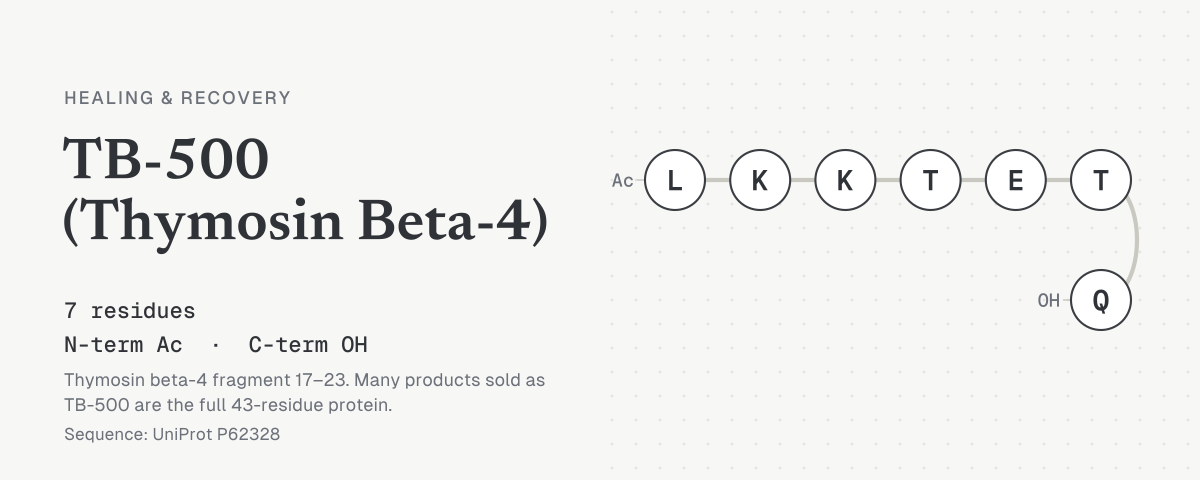
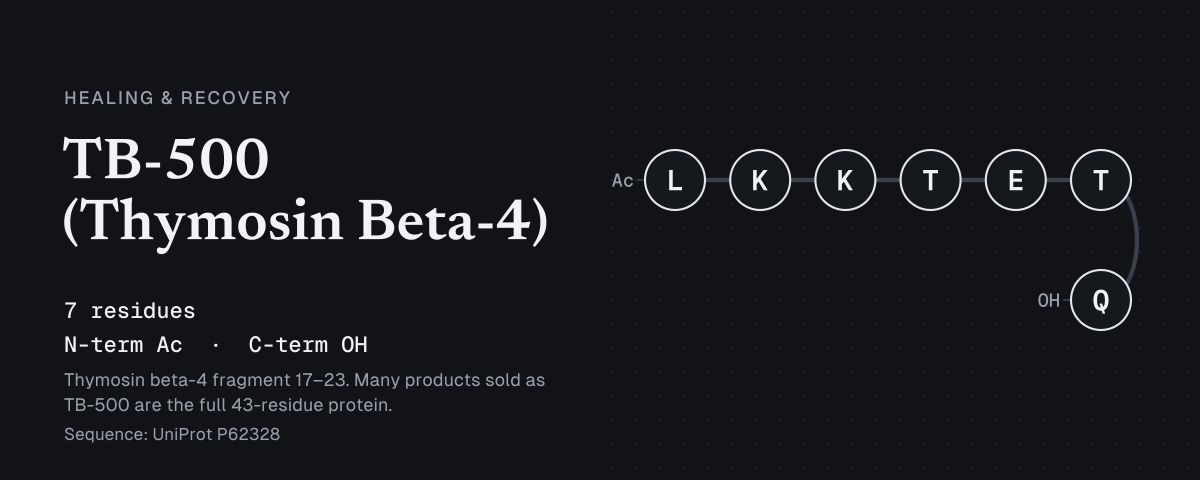
🔹 What is TB-500? Class : Synthetic peptide fragment of thymosin beta-4 (amino acids 17–43). Mechanism : Promotes actin polymerization , enhancing cell migration , tissue remodeling , and wound healing . Stimulates angiogenesis (formation of new blood vessels) and improves tissu
Updated Nov 22, 2026
🔹 What is TB-500?
Class: Synthetic peptide fragment of thymosin beta-4 (amino acids 17–43).Mechanism:
- Promotes actin polymerization, enhancing cell migration, tissue remodeling, and wound healing.
- Stimulates angiogenesis (formation of new blood vessels) and improves tissue oxygenation.
- Exhibits anti-inflammatory effects and reduces fibrosis.
- Supports muscle, tendon, ligament, and skin regeneration by mobilizing progenitor cells to sites of injury.
Primary Focus:
- Tissue repair and regeneration (muscle, tendon, ligaments, skin).
- Wound healing and recovery from injuries.
- Anti-inflammatory support in chronic injuries or tissue stress.
- Potential cardiovascular and organ repair (research context).
🔹 Oral Dosage
- Not effective orally; TB-500 is degraded in the digestive tract.
- Preferred administration is subcutaneous or intramuscular injection for systemic or localized effects.
🔹 Injectable / Subcutaneous Dosage (most common)
- Range: 2–5 mg per week, typically divided into 2–3 doses.
- Frequency:
- During acute injury: daily or every other day injections for 2–4 weeks.
- Maintenance / preventative use: 2–5 mg weekly for 4–6 weeks.
- Local vs systemic: Can be injected near the injured site or systemically (subcutaneous away from the site) for general tissue repair.
Rationale: Low-dose repeated injections support tissue regeneration and reduce inflammation without overwhelming systemic effects.
🔹 Cycle Length
- Acute injury: 2–4 weeks of daily or every-other-day dosing.
- Recovery / preventative: 4–6 weeks of weekly dosing.
- Off-cycle: 2–4 week breaks are often used before restarting if long-term use is desired.
🔹 Optimal Dosing Window
- No strict timing requirement; injections can be done morning or evening.
- Some users prefer post-workout to coincide with natural repair and recovery processes.
✅ Educational Integration Example
- Protocol: 2 mg TB-500 subcutaneous, 3x per week for 4 weeks.
- Paired with: BPC-157 or GHK-Cu for synergistic tissue repair; proper nutrition and physiotherapy enhance outcomes.
- Rationale: TB-500 mobilizes cellular repair processes, while adjunct peptides and therapies support faster recovery and improved tissue resilience.
🔹 Stacking Strategy (Educational / Complementary)
Since TB-500 targets tissue repair and regeneration:
🔸 Tendon, Ligament & Muscle Repair
- BPC-157: Localized tendon, ligament, and gut repair.
- GH secretagogues (CJC-1295/Ipamorelin): Support anabolic and regenerative pathways.
🔸 Skin & Anti-Aging Support
- GHK-Cu: Enhances collagen deposition and tissue remodeling.
- Epitalon: Supports cellular repair and longevity.
🔸 Recovery & Anti-Inflammatory Support
- Omega-3s, Curcumin, NAC: Reduce oxidative stress and systemic inflammation.
Rationale: TB-500 serves as the foundation for regenerative support; complementary agents amplify tissue repair, reduce inflammation, and maintain overall recovery capacity.
⚠️ Safety Notes
- Minor pain or redness at injection site.
- Long-term human studies are limited; mostly anecdotal or animal research.
- Avoid combining with untested compounds without professional guidance.
Studied in Humans? Yes
FDA Approved? No
Allowed for 503a Compounding Pharmacy? No
Rory's Comment: Thumbs Down
Disclaimer: Do not rely on any dosing information provided, this is for educational and research only. Always double and triple check alternative references for education. Please consult with healthcare provider for your specific dosing and protocol if applicable.
Dr. Bhatti - Part 2
Dr. Bhatti - Part 3